
Online Restorative Yoga Classes – Recovery for Tired, Overworked Bodies
You’re allowed to slow down. Genuinely.
If you’re exhausted, recovering from something, or just running on empty and don’t quite know how you got here, this isn’t the place where you’ll be asked to push harder. It’s the opposite. This is for injury recovery, burnout, getting back on your feet after illness, and the kind of deep fatigue that doesn’t go away with one good night’s sleep, no matter how much you’ve tried to catch up on it.
You don’t need to prove you can handle one more thing before you’re allowed to rest.
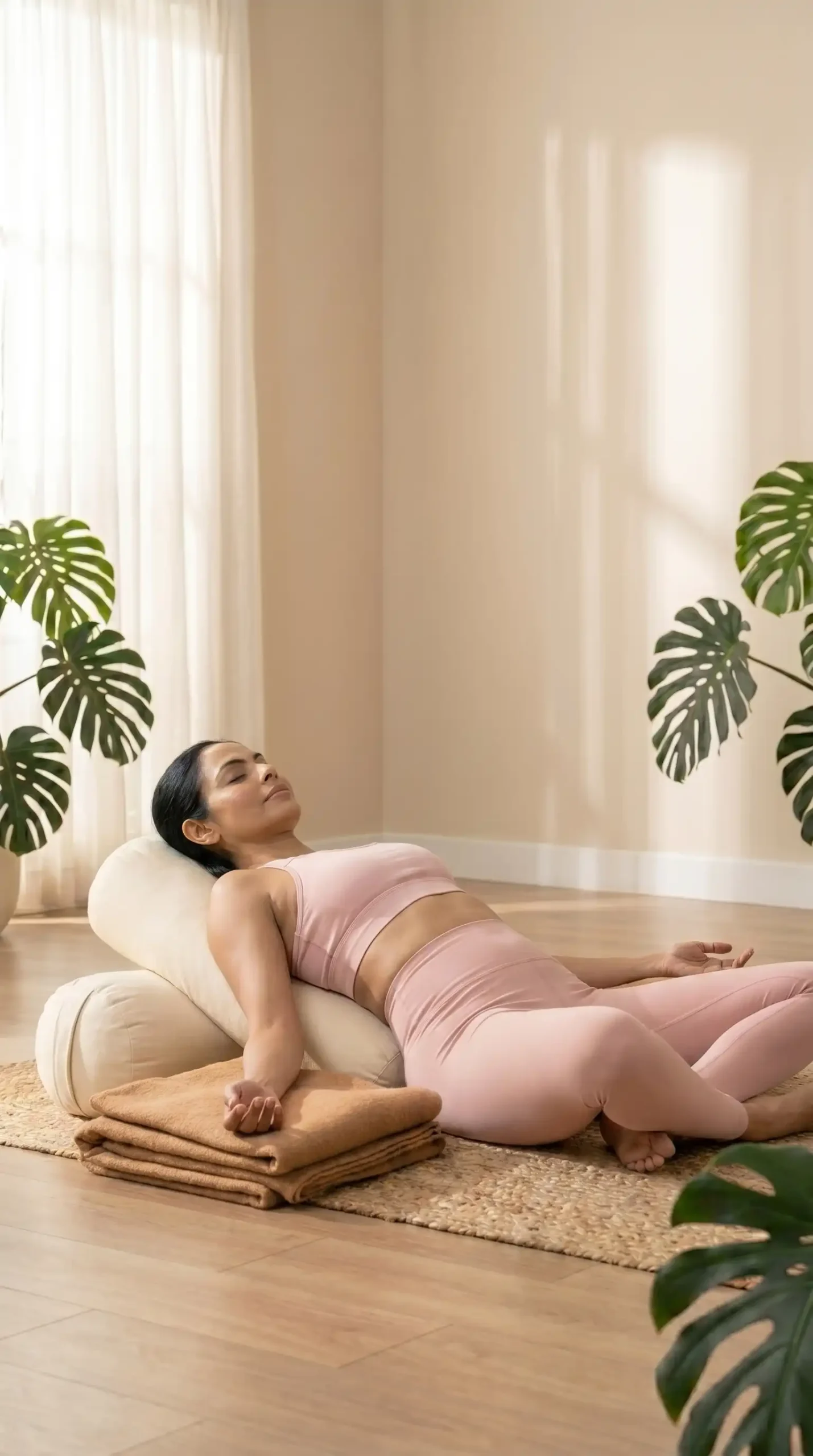
What Is Restorative Yoga, Really?
Most yoga asks something of you — strength, flexibility, stamina. Restorative yoga asks for something different. It asks you to stop.
This isn’t active yoga slowed down a little. It’s a completely different practice. Poses are held for several minutes at a time, fully supported by bolsters, blankets, and props, so your muscles never have to work to hold the shape. Your body just gets to rest there, properly, without effort.
That stillness is doing more than it looks like from the outside. When you’re not bracing, not stretching, not trying — your nervous system finally gets the signal it’s been waiting for: it’s safe to stop being on alert.
Here’s the thing worth saying clearly: rest is productive. It is not laziness, and it’s not “doing nothing.” It’s giving your body the deep rest it needs to actually repair, which is something most of us never properly allow ourselves to do.
Who This Is Really For
This programme tends to find people exactly when they need it most.
- People recovering from injury or surgery, who need movement that supports healing without straining anything
- Anyone dealing with burnout or adrenal fatigue, where the body has simply been running on stress for too long
- Students who say they’re “too tired for yoga” — this is exactly, specifically for you. Not despite the tiredness. Because of it.
- Anyone using it alongside more active training — our weight loss yoga programme and Surya Namaskar sessions both recommend at least one restorative session per week. Recovery is where the results from active practice actually consolidate.
If you’ve been pushing through exhaustion because slowing down felt like failing, we’d like to gently disagree with that. Burnout recovery doesn’t happen by force. It happens by finally letting your body do what it’s been asking to do for a while now.
Why Live Guidance Matters Here
This might be the one style of yoga where it’s easiest to assume you don’t need a teacher. Just lie down, right?
Not quite. Proper alignment and prop placement actually matter, especially if you’re recovering from injury or managing a health condition. Our online restorative yoga classes are fully live, so Geetanjali can guide your setup, check in on how you’re doing, and adjust the pace of the session to where your body actually is that day — not where a generic video assumes you should be.
This is a genuinely gentle yoga practice — and unlike most relaxation yoga classes, it’s fully live with someone actually watching how you’re doing.
What Changes When You Practice
Nervous system recovery
Long, supported holds calm an overactive nervous system, easing your body out of fight-or-flight and into nervous system balance — something closer to actual rest. This is restorative yoga for stress relief at its most fundamental level. This nervous system calming is also the foundation of our Pranayama and Meditation programme — many students practice both together, using breathwork to arrive and restorative holds to settle deeply into the rest their body needs.
Better joint mobility, without strain
Restorative stretching, held gently and supported by props, improves mobility without ever pushing into pain or overexertion. It’s a genuinely safe option for restorative yoga for beginners or anyone returning to movement after time away.
Reduced inflammation
Chronic stress keeps inflammation simmering in the body. As your nervous system settles, that slow-burning stress response eases too, supporting a real, measurable stress recovery over time.
Better sleep, steadier emotions
This is restorative yoga for sleep in practice – as your body downshifts out of constant alertness, sleep quality improves, and so does your capacity to handle whatever the day throws at you. Many students also find their anxiety eases here – a calmer nervous system makes those thoughts a little easier to sit with.
For women whose sleep and anxiety are connected to hormonal imbalance — particularly PCOS — our PCOS yoga programme addresses the hormonal root directly, while restorative yoga supports the daily stress load that makes symptoms worse.
Live Online Sessions
0-10 Mins
Setting up — props, bolsters, finding your position
10–40 Mins
Long, supported holds — full stillness, no effort
40–50 Mins
Transition — gentle movement between poses
50–60 Mins
Final rest — extended stillness before closing
Frequently Asked Questions
Is restorative yoga actually exercise, or is it just lying down?
You’re not building muscle, but you’re actively practising relaxation techniques that support nervous system regulation — and that has real, measurable physical benefits
Do I need props at home for restorative yoga online?
Pillows, cushions, and a folded blanket work perfectly well. We’ll guide you through simple substitutions if you don’t have yoga-specific props.
Is this suitable if I'm recovering from surgery?
Often yes, with guidance. Tell us about your recovery beforehand so we can adapt poses safely to your specific situation.
Can yoga genuinely help with anxiety?
Yes. By calming an overactive nervous system, many students find it noticeably eases anxious thoughts and racing minds over time.
How is this different from a regular relaxing yoga class?
A regular relaxing class slows things down — ours stops entirely. Poses are held for several minutes, fully supported, with live guidance on prop placement and alignment. It’s closer in purpose to our Pranayama and Meditation sessions than to a gentle flow class — stillness and nervous system recovery are the whole point.
You don’t need to earn rest. You just need to allow it.
Tell us where you are — recovering, burned out, or simply running on empty. We’ll build a session around exactly that.